Showing posts with label intra uterine insemination. Show all posts

Monday, November 12, 2012

Woman Has Two Failed IUI's With Donor Sperm: Needs An HSG

Hello,

I am a 35-year-old woman writing from Missouri. My husband and I have been trying to conceive for 15 months. After we'd been trying for a year, we went for testing, and my husband was found to have no sperm. We decided to move forward with donor sperm. I had some blood work done (thyroid, progesterone checked) which was normal/ovulatory. I also had a sonohysterogram and endometrial biopsy to investigate my heavy periods; neither of these tests revealed any problems.

So far, I've had two IUIs (intra uterine inseminations) with donor sperm. Neither has been successful (though I had a 21-day progesterone test after both that confirmed ovulation). My doctor is having me use Clearblue Easy OPKs to determine the timing of the insemination. The clinic does one insemination per cycle. Is this the typical procedure? I'm concerned about getting the timing right.

I haven't had a HSG (hysterosalpingogram) test yet. I asked about scheduling one just after my last failed IUI and the secretary indicated that I wouldn't be able to do an IUI and HSG in the same cycle. I'm not sure why. So I don't know whether to do another IUI this cycle, or have the HSG. Any recommendations? What are the risk factors for blocked tubes? I've never had an STI or HPV, if that is relevant.

I know that even though we've been trying a long time, due to my husband's infertility, we've only really had two chances to get pregnant. Psychologically, though, it feels like this has been going on forever. The fact that I'm 35 just increases my anxiety (especially since we'd love to have two children eventually). How many IUI cycles would you recommend before moving to IVF?

Thank you so much. I have appreciated your blog and your thoughtful answers to others' questions for a long time.

K. from Missouri, USA

Answer: Hello K. from the U.S. (Missouri),

Using only one IUI per cycle is acceptable and used by many infertility specialists and Ob/Gyn's. It is really the doctor's preference. If you've been reading my Blog (womenshealthandfertility.blogspot.com) you will see that my preference is two IUI's per cycle (24 hrs and 48hrs). There are two schools of thought regarding this matter and studies do not endorse or disprove either method, so either method is fine. I like to have fresh sperm as close to ovulation as possible and so that is the reason for two since it cannot be known exactly when ovulation occurs. However, using donor sperm, that would be more expensive.

I would not attempt another IUI without having done an HSG. In fact, I would not have recommended an IUI without first having done this test. This is because if your tubes are blocked, for whatever reason, the IUI's will fail. Sometimes women can have mucous blocking their tubes and the HSG can unblock them.

In general, the recommendation is to do no more than four IUI's because most patient will be pregnant by 4 attempts. After four attempts, the pregnancy chances drop drastically, probably because there is something else going on. You have an age issue so you don't want to waste a lot of time. Has your husband had a testicular biopsy to determine if he is making sperm but it is just not getting out? If you decide to pursue IVF, that is something you might want to have done by a Urologist to check and see if you can have a child with his genetics. The sperm, if he is making it, can be aspirated (TESA) and used in IVF to inject into the eggs and fertilize them.

Good Luck,

Dr. Edward J. Ramirez, M.D., FACOG
Executive Medical Director
The Fertility and Gynecology Center
Monterey Bay IVF Program
www.montereybayivf.com

Monterey, California, U.S.A

Comment: Dr. Ramirez, Thank you for taking the time to answer my question. My husband and I both appreciate your helpful, thorough response very much. We feel much more prepared for our next visit with the RE. We now know the questions we want to ask and the direction we'd like to go. Again, thank you. K. in MO P.S. Your blog is very helpful too!

Friday, June 8, 2012

IUTPI: Is It A Better Method Of Intra Uterine Insemination?

Question:

My wife and I are trying for a child for almost a year now and a doctor recommended us this new method of intrauterine insemination, IUTPI (IntraUterine TuboPeritoneal Insemination). I would like to ask you if you have heard about it and of course what is your opinion about it?? You can find the link below.

Thank you. G. from Greece

http://www.iutpi.eu/en.html

Answer:

Hello G. from Greece,

The goal of insemination has ALWAYS been to allow the sperm to travel into the tubes. That is because fertilization has to occur in the tubes. The technique that is offered by this Physician is NOT innovative and has not been proven better than current techniques in my opinion. He is using a larger concentration of the injected pellet (1 ml vs 0.3 ml) which certainly increases the availability of the fluid to get into the tube but I would anticipate that it will cause increased discomfort and cramping similar to doing an HSG (hysterosalpingogram). Is that more effective? A No. 0.3 ml is sufficient to get fluid into the tube with minimum discomfort. He also states that he uses a clamp to prevent reflux, which I am sure needs to be done because of the large amount of fluid being injected. Otherwise the majority of it will flow out.

IUI is dependent on many factors, the least of which is getting sperm to the tube. The success of IUI is mainly dependent on timing, the ovulation of more than one eggs so that there is an increased chance of an egg getting into the tube (getting into the tube is not automatic), fertilization of the egg by the sperm, quality of the egg, development of the egg into a good embryo, travel of the embryo into the uterus, hatching and extrusion of the embryo from its shell, attachment of the embryo to the uterine lining and growth of the lining around the embryo (implantation).

How is the IUTPI helping those steps? None that I can see. A standard IUI, if done properly, should give you equal chance of pregnancy because sperm delivery is the same. In my clinic, I have had a consistently 33-43% pregnancy rate per patient using proper technique but that is also dependent on factors such as the woman's age and the cause for her fertility problems.

Thanks for the question.

Good Luck,
Dr. Edward J. Ramirez, M.D., FACOG
Executive Medical Director
The Fertility and Gynecology Center
Monterey Bay IVF Program
www.montereybayivf.com
Monterey, California, U.S.A.

Saturday, October 22, 2011

TTC Patient Needs Aggressive Approach After Laparoscopy For Endometrioma or "Chocolate Cyst"


Question:

Hi, I have been trying to conceive since 1 year. I am 29 yrs old,and a professional with busy working schedules. I recently got myself investigated and found that my FSH levels r 7.09 and LH levels 3.0, AMH levels 3.29.

I have undergone 2 ovulation induction cycles which showed normal ovulation but I have a tendency towards cyst formation. HSG is normal. My antral follicle count is 6 and 4 in both ovaries. Kindly opine if i should undergo IUI cycles with clomiphene or with gonadotropins or should I directly go ahead with IVF cycle?

I am worried as my FSH levels are on the higher side and also my FSH:LH ratio is >2:1.

I recently underwent a hysterolaproscopy and was found to have a small chocolate cyst of 1cm in one ovary that was removed with cyst wall and spot on the other ovary along with few spots in the P.O.D that were fulgerated. Rest of findings were normal....no adhesions, healthy tubes with free spill and good uterine cavity.

From what I have learnt, endometriotic ovaries have a poor ovarian reserve and chances of recurrence of endometriosis is also high. My FSH values are already in the upper range.So what do you suggest i should go for? What sort of induction should I undergo?

Thank you. S. from India

Answer:

Hello, S. from India,

First, let me reassure you that your lab tests, including FSH level, are all normal.

More important were the findings after your laparoscopy. With an endometriotic cyst present (chocolate cyst or endometrioma), we would automatically classify you has having stage 3 endometriosis. Studies have shown that stage 3 and 4 endometriosis affect fertility. Normally, with these stages IVF would be the recommended treatment of choice. But considering that you are young, there are some lesser options that you can try.

First, let me point out that your diagnosis is "Endometriosis" as the cause of your infertility. It has been treated by laparoscopy thus far. However, we know that if there is visible endometriosis present on a laparoscopy, then microscopic endometriosis exists as well.

For infertility patients, I recommend a 3-6 month course of Lupron depot therapy to get rid of any residual endometriosis before moving forward with any treatment. This medication will put you in a semi-menopausal state for the duration of the treatment but there will not be any long term effects. You can then begin treatment immediately thereafter. Because endometriosis will return within six months after ending this treatment, I would recommend that you proceed with a more aggressive treatment such as insemination. I would recommend four attempts, using Clomid 150mg or higher to have 2-3 ovulatory sized follicles per cycle, alternating with Femara 5.0-7.5 mg since you don't want to take Clomid in consecutive months (it can lead to poor endometrial lining formation and prevent pregnancy, among other things).

If you don't achieve pregnancy by four good IUI cycles, then I would proceed directly to IVF.

The alternative would be to go directly to IVF, in which case, it is not absolutely necessary to take the Lupron treatment, although some docs still will do this. IVF bypasses the pelvis and takes the eggs out of this hostile environment. It is the preferred treatment for stage 3 or 4 endometriosis. It will also be the fastest way for you to get pregnant.

Good Luck,

Dr. Edward J. Ramirez, M.D., FACOG
Executive Medical Director
The Fertility and Gynecology Center
Monterey Bay IVF Program
www.montereybayivf.com
Monterey, California, U.S.A.

Friday, August 26, 2011

37 Year Old Fails 3 Clomid Cycles & 2 IUI's: What Should She Do Next?


Question:

Dear Dr. Ramirez: thank you for your great service!

I just turned 37 years old and have been ttc for 1 year already. My cycles all my life have been like clockwork (ovulating on day 13 in a 26day cycle). After charting and some blood tests during the early months of ttc, I realized I had low progesterone. I was put on suppositories and after another 6 months of no success, I was put on 50mg Clomid. That's when my cycle was completely thrown off. On Clomid cycle #1, I ovulated on day 19 (much later than normal), on Clomid cycle #2, I ovulated on day 14. Both cycles were followed by unsuccessful IUIs (intra uterine inseminations). On Clomid cycle #3, I ovulated on day 11, so we missed it and didn't do IUI. On cycle #4, I ovulated on day 10 and I did two back-to back IUI (again unsuccessful). My lining is fine, there are no cysts and all my blood work on all hormone levels is good within healthy normal levels. In fact my hormone levels were normal when I tested during my natural cycle before taking Clomid. Only progesterone was low and the suppositories didn't provide enough (day 21 showed 12 only), so 2 months ago I was put on PIO and that works like magic (level was 33 and 36 on day 21).

I read in on your blog that women who ovulate on their own shouldn't take clomid, which may REDUCE their chances of getting pregnant. Did we undertake the wrong treatment? Again, until I started clomid, you could set your watch by my cycle and I could check my ovulation using the monitor. After taking Clomid, my monitor cannot register any hormone changes and peak ovulation anymore. I was told that given my age the next thing to do is move to a more aggressive treatment (injectables), but if I was so regular and ovulating on my own, why do i need the injectables?

The fertility center never did an ultrasound to see how mature my follicles are during my natural cycle (they did this only when I was on Clomid), so my inclination is to get off clomid and try a natural cycle for a few more months again and ask them to see if my follicles are large enough. Would you think that's wise or shall I move to more aggressive treatments? My husband's sperm count varies from 25mil to 100mil during the IUI cycles. He also had average motility of 90%. Semen analysis also indicated 80% morphology.

Thank you kindly for any advice you may be able to offer. L. R. from Lancaster, PA

Answer:

Hello L. from the U.S. (Pennsylvania),

The main problem, and only problem that you have identified, is your age. I call this the age related egg factor. This means that the eggs have aged and have decreased in quality and viability. A study was done to look at embryos created at 37 years old and did genetic testing on those embryos and found that only 20% were normal, a reflection of egg quality. So that is the hill that you are trying to overcome.

In this case, the use of fertility medications is to achieve "superovulation" not ovulation. The main use of Clomid is to induce ovulation in women that are not ovulating but in older women, the goal is to increase the number of eggs that you ovulate to increase the chances that you will ovulate a good egg. In my patients over 35, my goal is to get them to ovulate 3-5 eggs per cycle. In my blog what I am referring to is the tendency for general docs (family practice and Ob/Gyn's) who automatically place an infertility patient on Clomid without finding out the root cause of their infertility, as if Clomid were some magic drug. They are misusing the medication.

In your case, because you stated that you are at a fertility center, I presume that you have undergone an infertility evaluation and nothing was found except for your age, so superovulation would be a reasonable first step. I also don't recommend consecutive Clomid cycles because Clomid works by blocking estrogen receptors and too much Clomid with block the estrogen receptors that are necessary for fertility, such as tubal motility, endometrial lining development and cervical mucous production. In that case repetitive Clomid cycles can lead to infertility by blocking these receptors.

Because of your age, I do believe that you need to pursue an aggressive treatment plan. I usually do not recommend more than 4 IUI cycles as part of an aggressive treatment plan because studies have shown that most patients will get pregnant within four attempts and pregnancy rates decrease dramatically after four. Keep in mind that at your age, your pregnancy rate per IUI cycle is only 12%. But if you want to continue to try IUI, then it is reasonable to try with injectables, although these meds are a lot more expensive, for two more carefully monitored and timed cycles. Then if that is not successful, I would strongly encourage you to proceed to IVF.

By carefully monitoring, I mean that ultrasound screening should begin at cycle day #9 the proceed from there depending on the size of the follicles. The closer you get to ovulatory size, the more frequent the ultrasounds will be. HCG should be given to trigger the ovulation. IUI's should be done at 24 and 48 hrs after the HCG trigger and then the progesterone is started the day following the second IUI and continued until the bHCG. Progesterone should be given as a vaginal suppository 2-3 times per day depending on the formulation.


Good Luck and thank you for reading my blog!

Dr. Edward J. Ramirez, M.D., FACOG
Executive Medical Director
The Fertility and Gynecology Center
Monterey Bay IVF Program
http://www.montereybayivf.com/
Monterey, California, U.S.A.

Saturday, January 22, 2011

Alternative Lifestyle Couple Trying To Conceive: Husband Is Transgender


Question:

I just want to know how to go about finding a sperm donor that doesn't cost hundreds of dollars. My wife and I are newlyweds who have settled into our lives together well and are wanting to have a child. Unfortunately I cannot get my wife pregnant (I am transgender and incapable of producing sperm). I would like to know if you know of any sperm banks (free ones maybe?) that are legitimate or of any other services that would work with us. The city of Louisville, KY doesn't have many open resources so I was hoping you could point us in the direction of something nearby or easily shipped. Thanks for your time. -R. from Kentucky

Answer:

Hello R. from the U.S.,

There are many sperm banks accross the U.S. and ordering from these can be done by phone or via the internet. However, I know of no "free" sperm donor banks. In general sperm costs $200-300 per specimen. This sperm usually needs to be delivered into the uterus by a treatment called intrauterine insemination (IUI). That will cost an additional $800-1000 per month of trying with a specialist. I know that some lesbian couples will try natural insemination with donor sperm, and that some sperm banks will sell sperm to them for that purpose. You'll have to check with each sperm bank. Most will require a doctor to do the procedure and obtain the sperm. With the "natural" method, done at home, the sperm is injected into the vagina with a syringe to deliver the sperm. Ovulation detector kits are used to time the injection. You would probably need two to three specimens done daily in order to hit ovulation exactly.

In order to do IUI (intra uterine insemination), you would need to see a fertility specialist. Most of us are aware of and have taken care of patients in your situation. I have helped lesbian couples and men who are incapable of producing sperm. These situations do not bother me or most fertility clinics. The fertility clinic will then help you to order the sperm. I use a clinic called the California Cryobank here in California. They have been in business for a long time (over 30 years!) and are very reputable. My patients have had excellent results with them & they will ship specimens worldwide.

Off the record, the only other option that I can think of, that could potentially be free, is to have your brother or friend, donate a sperm specimen for you, preserving the specimen in a cup. Keep in mind that the specimens should be collected and injected on the two to three days after the ovulation predictor kit is positive. This will, of course, depend on whether you have a brother or friend that would be willing to help you with that. (One of the most popular movies last year dealt with a lesbian couple who decided to go that route, "The Kids Are All Right".)

Hope this helps, good luck,

Edward J. Ramirez, M.D., FACOG
Executive Medical Director
The Fertility and Gynecology Center
Monterey Bay IVF Program
Monterey, California, U.S.A.
Wednesday, January 19, 2011

45 Year Old Woman With FSH Of 13, Fails Four IUI Cycles: Go To IVF With Her Own Eggs Or With Donor Eggs?


Question:

Hello Dr. Ramirez,

I'm writing to you from Texas. I just turned 45 and in the past 4 months I have gone through 4 IUI cycles (3 w/Femara) and one natural. None worked, but my fertility specialist thought it was worth a try because there is no problem with me (other than my age) or my husband and our ability to conceive. He did mention that there was a small amount of endometriosis, but nothing to be concerned about. We had been trying for over 3 years before I finally went to a specialist. I know I should have gone much sooner.

My question is this: We have decided to try IVF . My big concern is the age of my eggs. My FSH was 13. Is there any greater chance of my becoming pregnant if I use my eggs and my husbands sperm to create an embryo, or if I use a donated embryo from a younger couple? I get somewhat different answers depending who I ask at my fertility clinic and it's quite frustrating. I don't want to change clinics if I can help it, because my doctor is top notch. His staff knows their stuff, but they seem to be too busy to give me any real in depth answers. I look forward to getting your opinion on this issue. I've found all kinds of websites that deal with donated embryos - are there any that you would recommend? Thank you! J. From Texas

Answer:

Hello J. from the U.S.,

I am very, very surprised that your "top notch" doctor recommended you to try IUI's (intra uterine inseminations) that many times based on your age and elevated FSH. Did he tell you that your chance of pregnancy was less than 0.5% per month? Did he tell you that your FSH was elevated and give you the diagnosis of decreased ovarian reserve, which essentially means time is critical for you. You may already be in a pre-menopausal state!

Unless my patient absolutely demands it, I do not recommend IUI in my 42+ year old patients or patients with FSH levels greater than 10. In my opinion, in order to have the best chances of pregnancy in the short time that you have left, IVF is the treatment of choice. At least there is a pregnancy rate at 45 years old that is about .5%, and for this reason I will let them try with their own eggs (many clinics do not), but it is with the understanding and plan that if it does not work then they will proceed with donor eggs. I have also had a few patients decide to mix their eggs with frozen donor eggs so that they don't know which resulted in the pregnancy (they preferred to not know that it was absolutely a donor). These eggs are purchased from an egg bank and are slightly less expensive than going the fresh donor egg route.

I think that based on your age of 45, and the elevated FSH of 13, I would strongly recommend that you proceed with donor eggs and IVF (in vitro fertilization). That will give you a pregnancy rate of 75% per attempt in my clinic and many other clinics.

In terms of finding a donor, there are three options: (1) finding your own donor that is either your family member, friend, acquaintance, which is the least expensive because you don't have to pay the donor but there could be some social issues, or (2) use a donor that is registered with that IVF center if the center has donors registered. This is usually the second least expensive way to go but there may be limited donor choices (3) Purchase frozen eggs from an egg bank or (4) go through an agency. There are many agencies across the country and you have to be very careful which agency to use. Some are reputable and some are not. This is the most expensive way to go and can double the cost of IVF because of the agency fee. We have worked with several agencies in the past, although most of my patients elect to use an egg donor in our registry.

Donor cycles are fairly easy to do from your side and will require a minimal amount of time at the IVF center. Because of this, many patients will travel to an outside clinic for a donor cycle due to price or the location of the donor. Many clinics, such as ours, can even arrange for preliminary and initial cycle visits to be done at a local clinic or IVF center so that the only travel required would be at the time of embryo transfer. So don't be limited by where you are. You have lots of options open to you. You just need to decide how you want to proceed from here.

I don't mean to be critical of your current clinic and I'm sure your doctor appreciates that you have a high opinion of their clinic. However, keep in mind that infertility clinics, doctors and treatments differ greatly. The fact that the staff at your center seem to be "too busy to give you any real in depth answers" should not be acceptable to you, considering the urgency of your situation. For example, our clinic is only one-on-one. Each patient is handled individually, and there is only one doctor that sees you, does your ultrasounds, does your procedures and makes recommendations. My patients have 24/7 email and phone access to me or my key staff. There are no mid level providers. We pride ourselves on being a boutique IVF center. It is what sets us apart from other, high volume, IVF centers that tend to make you feel more like a number. I hope this helps.

Follow-Up Question:

Hello again Dr. Ramirez, After reading your response I felt pretty emotionally bad, for lack of a better way of putting it. I was aware of the limitations with the IUI, the reason I did it is because my doctor felt there was nothing "wrong" with me or with my husband's sperm, and he assumed sluggish motility may have been part of the problem. I was planning on doing IVF next month, either using my own eggs (which I'm not entirely comfortable with) or a donor embryo rather than donor eggs, because of the price disparity. I don't live in CA where infertility treatments are covered under alot of insurance plans.

I said my doctor was top notch, in part because of the high ratings and recognition he has received in his field. That being said, I've never had a true one on one relationship with anyone at the clinic - although I tend to deal w/the same nurse and doctor. The clinic does offer an egg donor program, but based on your answer, I'm not so sure if I should continue on with them, since I don't believe their database is that comprehensive. In fact, I believe they go outside the clinic for donors, and the cost of the IVF with an egg donor is somewhere around 18,000. I asked you about FET (frozen embryo transfer), but you did not comment. I would like to get your opinion about this and if you have any recommended facilities that house frozen embryos. Unfortunately, the clinic I'm working with does not have any recommendations for embryo donors. After reading your answer, I'm not so sure about anything anymore. Thanks for answering, J. from Texas.

Follow-Up Answer:

Hello J.,

I apologize for causing you this strife. I don't want you to give up, rather, I am just here to give you advice and opinion. Certainly you can see that my opinion is greatly different from your doctor's.

California is not a mandated state in terms of infertility, so many of the insurances don't cover it here either. So I am very aware of the costs of treatments. It is a dilemma in my clinic as well where we lose 10-15 patients per cycle because of finances. Yes, I know that egg donor cycles can cost $18,000 or more per attempt.

Embryo donation is a fairly new option. I would recommend that you look at the web and you will find several organizations that assist with embryo donation. Keep in mind, however, that there are not a lot of embryos out there that are donated. Many parents do not want siblings all over the country. This certainly could be a lower cost than standar IVF because the transfer procedure is fairly simple. The medication cost is less and the procedure cost is less involved. Our clinic would charge $3500 for an FET (frozen embryo transfer). That is about what it costs in most of the clinics in our state. I don't know what the cost of these embryos would be, however, and most IVF clinics do not have embryos to donate. Most of the embryo banks are Christian organizations that either facilitate the process or have their own storage facility so that the embryos are not destroyed.

Another option is Frozen Egg Banks, which has now become a viable option. I recently had a 45 year old patient use that method. The costs were still higher than an IVF cycle, because the Frozen Egg cost was high, but it was less than using your own egg donor. Unlike embryos, these are unfertilized eggs that were frozen and can be fertilized with your husband's sperm. The protocol you would go through would be like an FET. It is more expensive than a simple FET because you have to purchase the eggs (I think then sell them in lots of two), ICSI would have to be done and the embryology process would have to be done like a regular IVF cycle. The only step that would not have to be done is the egg retrieval step, which is the most expensive part of the IVF cycle.

For both embryo transfer and frozen egg transfer, the pregnancy rates would be very high (75% per attempt in our clinic). It certainly is better than your own eggs.

Again, I apologize for the comments that I made because they deflated your hopes and made you feel emotionally deflated. I hope these new comments will help you more constructively.

P.S. Kelly Preston (John Travoltas wife) just delivered a healthy baby boy at the age of 48. Of course, she doesn't say whether she used any assisted reproductive technology (and I would bet she did), but if not, then there is always a chance. I never say NO to my patients that want to try, I only make sure they understand all their options and their chances up front.

Good Luck,
Edward J. Ramirez, M.D., FACOG
Executive Medical Director
The Fertility and Gynecology Center
Monterey Bay IVF Program
http://www.montereybayivf.com/
Monterey, California, U.S.A.

Saturday, January 15, 2011

Norwegian Patient With Arcuate Uterus & PCOS Wants To Know: Is IUI A Good Option?


Question:

Hi, I wrote before. I have an arcuate uterus and polycystic ovaries. My hormonal results were fine as well as my test for cervical cancer. My husband and I have decided to go for artificial insemination since we have been trying to have a baby for 4 years. I have never gotten pregnant. My question will I qualify for that and what does the whole process involve? Is it less expensive than in-vitro? Thank you, N. from Norway

Answer:

Hello N. from Norway,

IUI (intrauterine insemination) is certainly an option for you, especially if you have been found to be completely normal except for ovulation, the polycystic ovarian syndrome. (As far as the "arcuate" configuration to your uterus, this is generally considered a normal variant and does NOT cause infertility, do not be concerned with that.) Because IUI is a "natural" treatment method, meaning your body has to go through all its natural steps to achieve pregnancy, each of these natural steps have to work properly to get pregnant. Therefore, it can take several IUI attempts to achieve pregnancy, just as it would take several months of trying normally for a regular couple. The pregnancy rates are age dependent and range from 3%-24%. The maximum pregnancy rate is 24% in a woman under the age of 30. It decreases from there due to age factors.

The basic problem with PCOS (polycystic ovarian syndrome) is that the ovary does not function correctly and therefore does not ovulate on a regular basis. Therefore, any infertility treatment that you do will require that you take fertility medications in order to induce the ovaries to ovulate. With IUI the goal is to get you to ovulate three eggs per month (that is what increases the pregnancy chances). Ultrasound is then used to gauge your progess and time when the insemination should be performed. Basically, when the ovulatory follicles reach appropriate ovulatory size (18-24 mms), then a trigger such as HCG is given to trigger ovulation. I do two IUI's at 24 and 48 hrs from trigger but some clinics will only do 1 IUI at 32-26 hrs. There are pros and cons of each and I believe that two IUI's are better despite the fact that studies have shown that they are equivalent (I'm not sure that the studies were good enought to show a difference). IUI cost tends to be much much less than IVF because there is less technology used. If you don't achieve pregnancy by four attempts, then the pregnancy rates decrease dramatically so it is recommended to proceed to IVF from there.

One of the difficulties with PCOS patients is that there ovaries are very difficult to stimulate, so that many (80-85%) end up proceeding to IVF. With the simple meds such as Clomiphene or Letrozole, many PCOS patients do not stimulate at all despite the highest dosages, whereas, with the injectables (gonal-f, Follistim, Bravelle, Menopur), they tend to stimulate too much and produce too many eggs necessitating cancellation of the cycle. With natural treatments like IUI we don't allow more than three ovulatory sized follicles because we cannot control how many get to the uterus, which would increase the risk of a super-multiple such as 5, 6 or 8 implanting. This is a situation you most certainly would want to avoid!

I hope this gives you the information that you desired. Thank you for writing me from Norway!

Good Luck,

Edward J. Ramirez, M.D., FACOG
Executive Medical Director
The Fertility and Gynecology Center
Monterey Bay IVF Program
Monterey, California, U.S.A.

Friday, December 3, 2010

Can Progesterone Be Given With Clomid Induction? PCO Patient With 3 Failed Cycles Wants To Know...


Question:
I'm 31, never pregnant. Dx PCOS, receiving metformin 1500 mg a day. Three cycles with clomid with no ovulation. HSG normal, husband semen analysis OK. Now going through second cycle of IUI (intra uterine insemination), ovulation stimulated with Gonal F and triggered with ovidrel.

First cycle progesterone level on day 3 after second IUI was low (2.3), so I asked the doctors why they can not prescribe progesterone to improve luteal phase and make implantation more possible, and they told me they do it only with IVF. Is this Ok? What I mean is, why don't give progesterone if the level is low, and it is know than low progesterone impairs implantation and also increases risk of miscarriage in first trimester? Please give me some advice, or some reference articles where to read about this (scientific articles to support my request) Thank you! S. from Arkansas

Answer:

Hello S. from the U.S.,

You have a very valid question and you should ask your doctor why they don't give progesterone after intra-uterine insemination. I'm sure there are many articles on the web that you could find that advise this technique. There is absolutely no reason not to give progesterone after IUI or even after simple ovulation induction.

However, I think that your thinking may be incorrect, however. If the ovulation induction were proceeding correctly, and ovulation occurs, then the hormones should be corrected and there should be a normal luteal phase. Usually a mid-luteal progesterone is not to see if there is adequate progesterone for implantation, but to see if ovulation in fact took place because if it did not, the progesterone would be low. So you see, rising progesterone levels occur from ovulation. If the progesterone is low, that is an indication that ovulation did not take place and replacing progesterone would not have anything to help i.e. no implantation would occur any way.

I have to wonder about the protocol that your doctor is using, and I would suggest that you look at my blog under how I do clomid induction cycles. One specific technique that I use is to follow the follicle(s) with the ultrasound to determine when ovulation is going to occur. That way, I can better time the insemination. I also give an HCG trigger. Then I start progesterone the day after the second IUI (I do two IUI's per cycle) for luteal phase support. This is mainly because progesterone is an easy medication to use, is not expensive and has no adverse reactions/side effects/harm to the pregnancy. It can only help and increased progesterone is one of the main stays for the treatment of implantation failure due to inadequate b-integrin levels.

Maybe you should ask your doctor why he uses it for IVF and not for IUI? The reason to use it should be the same.

Good Luck,
Edward J. Ramirez, M.D., FACOG
Executive Medical Director
The Fertility and Gynecology Center
Monterey Bay IVF Program
Monterey, California, U.S.A.

Wednesday, October 20, 2010

Patient Runs Risk Of High Multiples With 7 Mature Follicles In IUI Cycle


Question:
I am on my 7th IUI cycle (a miscarriage on the 4th attempt). This month I have 7 follicles mature and ready to go. I am 36 years old. We would gladly welcome twins or even triplets.

What is the risk of higher order? A. From the U.S.A.

Answer:

Hello A. from the U.S.,

I would not continue the cycle with 7 ovulatory sized follicles (>15 mms) because of the risk of a super-multiple gestation (>2). I cannot give you a statistical risk as that number does not exist, but I would expect the risk to be high. Keep in mind that even twins are a high risk pregnancy and should not be taken lightly! I had an IVF patient this week who was pregnant with twins that just lost both at 23 weeks due to premature labor and delivery. It is heartbreaking. That is why we try not to have twins and definitely, try not to have triplets.

I will allow up to 5 mature follicles at 36 years old, but no more than that. Some RE's will not allow more than 3. I don't think you should take that chance.

You did not say if you are seeing an Ob/Gyn or an RE. I would like to comment on the fact that this is your 7th IUI (intra uterine insemination) cycle...I would hope that you have had a thorough infertility evaluation. One very simple reason that many women fail their IUI's is that their tubes are blocked. I can't tell you how many patients I have seen that have done multiple cycles of Clomid and IUI's who end up having this problem. If you have had a complete workup and you still fail, at 36 y.o. I would only have had you try 4 to 5 IUI cycles. At this point I would be counseling you regarding a more advanced fertility procedure, IVF (in vitro fertilization). Time is not on your side after the age of 35 as fertility begins to decline rapidly.

See my blog post: "Tips On How To Increase Your Fertility" for more information.

Good Luck,
Edward J. Ramirez, M.D., FACOG
Executive Medical Director
The Fertility and Gynecology Center
Monterey Bay IVF Program
Monterey, California, U.S.A.

Sunday, September 19, 2010

Canadian Wonders If Progesterone Is Needed for Clomid & IUI Cycles: YES!


QUESTION:

I am trying to conceive and I have had 3 rounds of Clomid (100mg) by itself with no success. I have also now done round 4 with IUI. With the IUI cycle, my doctor told me to take 100mg Progesterone 2xday, intervaginally, and 2mg of estrace 2xday. My question is this...should I have been given Progesterone with the first 3x of Clomid?

I have heard Clomid lowers the progesterone levels and mine was only 7 to start with. I have also had a history of lots of ovarian cysts which has been explained to me as one of the possible reasons I haven't conceived again...because cysts indicate being estrogen dominant.

With this in mind, I have looked up estrace and it is contraindicated in pregnancy...so now I am confused. Why am I being prescribed a med that is contraindicated in pregnancy, when that is what I am trying to achieve, and why if I am already high in estrogen?

I am confused and wonder if I should only be taking the Progesterone....Help! A. from Canada

ANSWER:

Hello A. from Canada,

Practically ALL medications state that they are contraindicated in pregnancy (for legal issues). In actuality, if you read all the fine print, it says to consult your doctor. Both estrogen and progesterone are required for pregnancy to occur. The estrogen is required to prime the endometrium for implantation and the progesterone both converts the endometrium for implantation and supports the pregnancy. They are both used in fertility treatments, and have been for many many years. No problems so far! So, you don't need to worry about using them.

However, I am not sure that you need the estrogen supplementation, especially in the luteal phase (after ovulation). It is usually required in the proliferative (endometrial proliferation in preparation for implantation) phase. The progesterone is required in the luteal phase (after ovulation).

I use progesterone, but not necessarily estrogen, in ALL my Clomid cycles. Clomid is an estrogen receptor blocker and so extra estrogen might be require in the first half of the cycle to make sure that a proper endometrial lining is developed, but that is not always the case. On the other hand, often Clomid with cause a lack of progesterone production, and progesterone is such a benign and easy supplement to use that I don't risk not having enough.

From what you have briefly described, I am not sure that you are in the best hands for this treatment. I know Canada limits the availability of specialists, but you might want to see a fertility specialist. I would recommend that you look up my blog, under "how I do Clomid cycles" and it will describe my recommendations for a proper Clomid induction cycle with or without insemination.


Good Luck and stay informed!

Edward J. Ramirez, M.D., FACOG
Executive Medical Director
The Fertility and Gynecology Center
Monterey Bay IVF Program
www.montereybayivf.com
Monterey, California, U.S.A.

Thursday, July 15, 2010

Australian Woman Has Possible Semen Allergy & Yeast Infection or Thrush


Question:

Ever since my partner and I have been having unprotected sex, I have been having a severe reaction straight after he ejaculates in me. It happens almost immediately with swelling internally and externally, burning, and pain for at least the next two hours. If I wash myself quickly sometimes this can help but if I'm too late then the pain continues. Recently I went to the doctor and the possibilities were "thrush, acidity or allergy". I was positive for thrush and commenced treatment. I reacted to the 7 day treatment of miconazole nitrate 2% in a very similar way to the semen. It also made the thrush ten times worse. The same occurred with clotrimazole once only cream and with Nystatin 100,000 i.u 14 day treatment cream (which I stopped at day 4) and then I tried the once tablet fluconazole 150mg which I developed a dry taste in my mouth and then a metal taste and severe abdominal cramping. All these side effects lasted for two weeks at a time. The thrush finally cleared with the tablet.

After having sex again the problem was still there. I then tried taking fexofenadine hydrochloride 180mg tablet half an hour before sex and this reduced the pain from 7/10 compared to 10/10 but the problem was still there. With the acidity part we both tried drinking only water, this didn't change anything. I'm getting married in November and I'm worried. Is there anything we can do? What tests can we get done to determine if I have an allergy to semen? Should I get a referral to a gynecologist? and how can I stop the pain? and if I get thrush again what options do I have left? C. from Australia

Answer:

Hello C. from Australia,

It is not very common but women can develop an allergy to semen, since it is a protein (medically known as "seminal plasma hypersensitivity"). It is a difficult problem to treat. Basically, you need to use a condom to avoid the contact with the semen. Sometimes, if enough time passes without contact with the semen, the allergy will resolve. Fungal infections (yeast infection) are the most common vaginal infections that women can have. You should be cultured for other bacteria as well to make sure that the symptoms you are having are NOT due to a different type of bacterial infection, and was due to the yeast. I am surprised that you had such a reaction to each of the vaginal medications used. That makes me think that there is something else going on and not a yeast infection. It is also possible that with all the inflammation your vagina is going through, it just has not had any time to heal.

So, I would recommend a natural treatment for the prevention of yeast, which is to use plain yogurt, mix it in a douche bottle (buy a douching kit from the store but DON"T use the vinegar solution given) with half/half water. Then use this to irrigate the vagina 2-3 times per week. This will increase the vaginal bacteria called lactobacillus, which will help to prevent yeast infections.

I would also recommend that you try intercourse with a condom and see if you get any type of vaginal irritation or reaction (unfortunately, when you will eventually try to get pregnant this method will be counter-productive). If you don't, then it is most likely that you have a semen allergy. If you do, then it is unlikely that you have a semen allergy but have something else going on. You should then make sure that your gynecologist does a vaginal culture. If it does look like you have an allergy to semen (the symptoms only occur with ejaculation in the vagina), then you may have to see an allergist to see if there is a way to desensitize you to your husband's semen. Your husband should also see a Urologist to have the semen checked and make sure that it is the correct pH. If it is not, and is more acidic, he may have something going on that needs treatment. It usually is best to see a male fertility specialist rather than a general urologist but there aren't very many so that may be harder. You may also need to be placed on a antihistamine and vaginal steroid to be taken before intercourse to reduce the inflammatory/allergic reaction.

If and when you decide to try to have children, and you do indeed have severe seminal plasma hypersensitivity, then you may have to resort to intra-uterine insemination or IVF. Going this route will allow the semen to be washed free of semen proteins making pregnancy possible by preventing an allergic reaction.

Sorry I can't give more specific information. I hope this will give you some guidance.

Good Luck,
Edward J. Ramirez, M.D., FACOG
Executive Medical Director
The Fertility and Gynecology Center
Monterey Bay IVF Program
http://www.montereybayivf.com/
Monterey, California, U.S.A.

Comment: Thank you so much for your reply. It is slowly becoming more clearer to me in how to go forward with my allergy to semen. In reply to your note, I do not get any symptoms of irritation when using a condom. I can find some relief in this method at least. And I'm glad to hear of a way to prevent the thrush. Your information has been in depth and very helpful.

Sunday, June 6, 2010

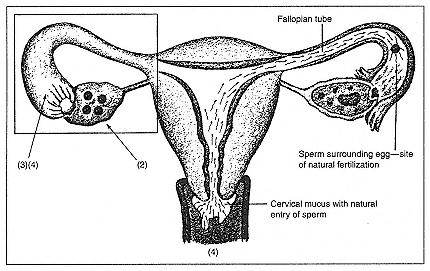
The Ten Natural Steps To Pregnancy: Where Do Ovulation Induction And IUI Matter Most?


Today's blog post is an attempt to clearly state the Ten Natural Steps that a woman's body needs to accomplish in order to achieve pregnancy. Ovulation Induction and Intra-Uterine Insemination are treatments that give an additional "boost" to a natural pregnancy path.

Step 1: The Hypothalamus/Pituitary complex secretes FSH and LH into the blood stream to stimulate the ovary and start the process toward ovulation.

Step 2: The ovary activates several follicles to start growing but only one becomes the dominant ovulatory follicle.

Step 3: Once the follicle reaches the appropriate size (24 mms), the hormone LH surges, the follicle ruptures and the egg is released into the culdesac, where the fimbria of the tubes are laying.

Step 4: The egg has to find and enter one of the fimbria to get into the tube.

Step 5: The sperm have to be waiting in the tube and when the egg enters, the sperm collect on the egg.

Step 6: Fertilization has to occur by one sperm entering the egg. The egg and sperm's genetic material unite.

Step 7: The fertilized egg divides and grows into an embryo (as it courses down through the Fallopian Tube over the next seven days).

Step 8: The embryo enters the endometrial cavity.

Step 9: The embryo has to hatch and the inner cell mass exits the shell and attaches to the endometrial lining.

Step 10: The endometrial lining has to grow around and accept the embryo (implantation). Pregnancy test will now turn positive and the embryo slowly develops into a fetus.

OVULATION INDUCTION assists in steps 1, 2 & 3.

INTRA UTERINE INSEMINATION assists in steps 1, 2, 3, & 5.


Thursday, May 6, 2010

30 Yr Old Has Failed Three IUI's With Donor Sperm: What's Wrong?


Question:

Hello Dr. Ramirez,

I am a 30 y.o who is TTC with donor sperm. I have not been diagnosed with any infertility issues at this time. My HSG test was normal. I did the first IUI with clomid, the second and third IUIs with 150 units Gonal and 5 units Lupron for 12 days each producing 6 follicles. Each follicle was greater than 15mm. I triggered with ovidel the night before insemination. My estradiol two days prior to the IUI were 2500 and 1500 respectively.

I am curious if there is something medically that could be done differently to increase the odds of conceiving. Also is it possible that I am not genetically compatible with the donor sperm? I am frustrated with not having any answers.

Please help. K. from Upstate NY

Answer:

Hello K. from New York,

I don't think that "genetic incompatibility" is an issue. It does not exist. I am very, very worried about your gonal-f stimulation cycles, however. The estradiol levels of 2500 and 1500 are IVF levels, and that is where we are stimulating very strongly to get a maximum number of eggs. For an IUI cycle that is way too much stimulation. The goal with IUI is to have 3 ovulatory sized follicles (>16 mms) at the time of trigger and the minimum size needs to be 18 mms for ovulation to occur. Also, if you are only having one IUI done, it should be timed to be 33-36 hours from trigger. I prefer the two IUI technique at 24 and 48 hrs, which gets the fresh sperm into the tubes closer to ovulation.

Keep in mind that IUI is a natural process and just replacing trying with intercourse. Because of this, it has a maximum pregnancy rate of 24% per cycle, and can take up to 4 cycles to achieve pregnancy. In this case, you just need to keep trying. However, I am a little worried about the protocol that you are using. Are you seeing a fertility specialist for this? With IUI, we generally do not use Lupron suppression, but that is okay to use. It's just an extra drug and shot that you don't generally need.

I would not have given up on Clomid so quickly. It works well and is much, much less expensive than Gonal-f. The only reason I would go to Gonal or Follistim is if you did not respond to max dose Clomid (250 mg).

I hope this answers your questions. Good Luck,

Edward J. Ramirez, M.D., FACOG
Executive Medical Director
The Fertility and Gynecology Center
Monterey Bay IVF Program
Monterey, California, U.S.A.

Thursday, February 18, 2010

PCOS & Insulin Resistance Syndrome Trying IUI for the Fourth Time


Question:

Hi, I am 37yrs old soon to be 38. I have PCOS and Insulin Resistance Syndrome. I did three cycles of IUI (intra uterine inseminations) with 150mg of clomid. When it came time for the IUI I received the first one then was given the Ovidrel (HCG) shot then had the second IUI the next day. No success at all.

For my fourth cycle, my RE put me on Bravelle 150 for 4 days then 225 for two days. I was told to take the ovidrel shot the evening before the IUI. I am wondering if my RE is having me take the triggers too late? Everything I read says 24-36 hours later. I asked my nurse during the clomid cycles why get the trigger after the first IUI and not before? She said to make sure I have definitely O'd (ovulated) for the second insemination. I am using Donor sperm.

Thank you. N. from U.S.A.

Answer:
Hello N. from the U.S.,

I am greatly dismayed by the treatment regimen you have received! Is the doctor you are seeing really an RE? Does he/she do IVF? The usual protocol for IUI is to follow the follicular development by ultrasound, just as is done in an IVF cycle, and when the lead follicle reaches 18 mm to 22 mms, the HCG (human chorionic gonadotropin) trigger is given, stimulating the release of the egg, or ovulation. The IUI is then done at approximately 36 hours (if only 1 IUI per cycle protocol) or at 24 and 48 hrs (if 2 IUI per cycle protocol). Neither cycles that you have gone through makes much sense to me, and may be a waste of your time and money (I know how expensive donor sperm is).

My other question is at your age, one or two IUI's might be advised but not more than three. Is it something that you insisted on? Certainly there is a chance of pregnancy with IUI at your age, I have had patients that were successful up to the age of 41, but the chances are only about 5% per cycle, whereas, with IVF you have a 60% chance of pregnancy per month.

I would recommend that you give that option some thought.

Good Luck,

Edward J. Ramirez, M.D., FACOG
Executive Medical Director
The Fertility and Gynecology Center
Monterey Bay IVF Program
www.montereybayivf.com

Sunday, January 17, 2010

Failed IUI In 38 yr old - Inadequate Protocol & Advice


Question:
I'm 38 and my menstrual cycles became erratic after an abdominoplasty removed approximately 1.2kg from my stomach area this past January. I am trying now to become pregnant and have undergone my first intra-uterine insemination (IUI), which failed.

I've had to use Provera twice to start my cycle after it went over forty days. Recently my OBGYN had me take Clomid on days 3-7 then Repronex on day 9. An U/S on day 12 revealed that I had a 20mm follicle so I was given a hCG trigger then had an IUI the next day. A later U/S revealed that the follicle was still there and that the hCG trigger apparently hadn't caused ovulation. Do you have any information on possible reasons why the trigger failed or whether it would be worth my time and money to try this same process again given this first failure?
Thank you very much for your time.

Answer:

Thank you for your question. It is not possible to know if ovulation actually occurred or not. We presume, based on the ultrasound that if the follicle disappears, then ovulation occurred. However, even an ovulatory follicle can reaccumulate with fluid, as we often see after IVF. So, it does depend on when the ultrasound was done. I always do two back-to-back IUI's on my patients. With each IUI, I look with the ultrasound again to see if ovulation occurred. It is generally good at seeing that ovulation occurred because it is within a very short time period that I am looking. In your case, because the ultrasound was done later, it is not accurate. In addition, some people will ovulate later than expected after the HCG injection. Remember, once the HCG is given, people will ovulate within 24-52 hours. I want my patients to succeed, and if that means doing the IUI on a Saturday & Sunday, in order to guarantee this success, then we come in on the weekend.

There is no reason to think that this treatment plan will not be effective, unless there is something else preventing you from becoming pregnant other than ovulation. From your history, the clomid is giving you the chance of getting pregnant with each cycle and you should continue. I would not recommend more than four cycles, however, because statistically, the chances for pregnancy decrease significantly after four cycles. I would also increase your Clomid dose and/or Repronex dose to try to get you to ovulate up to five eggs per cycle.

One thing that needs to be mentioned is the impact of age on your fertility. You certainly can get pregnant with IUI but it is not the best option. At 38 yo, the chances of pregnancy per IUI cycle is 5-10%. Because of this, we generally recommend proceeding with IVF after the age of 36yo. With IVF, in a good program, you can have a 52% chance of pregnancy per cycle. Because of your age, I would limit the number of IUI cycles to three or less. If your OB/GYN cannot get you to form at least 3-5 follicles, then IUI should be abandoned. It is not significantly increasing your chances. You should also have a cycle day # 2 or 3 FSH level done. If it is 7.0 or above, then I would go straight to IVF. You are looking at time passing, which is affecting your chances even with IVF.

Good luck and don't hesistate to query your Ob/Gyn regarding his success rates with IUI's.

Sincerely,

Edward J. Ramirez, M.D.
Executive Medical Director
The Fertility and Gynecology Center
Monterey Bay IVF
www.montereybayivf.com

Sunday, December 13, 2009

Trouble With 2nd IUI & Using Clomid


Question:

Hi, I'm on Clomid for my 2nd IUI (intra uterine insemination), as the first one didn't work out. The first cycle I went for the sonar on cd13 and had the IUI on cd15. The doc would've preferred to do it a day or so later but we couldn't because of lab related things. So this cycle I'm going on cd14. I would like the doc to give me the trigger to do on the eve of cd15 and do the IUI 36 hours later.

I'm worried though, I do ovulate on my own. Is it possible for my body to get the LH surge before I trigger or do I need the trigger to ovulate because I'm on Clomid? I'm taking 100mg a day. Will cd15 be too late? We're dependant on the lab for processing the sperm, so the doc cannot do the IUI on cd16 (a weekend).

Answer:

Clomid does not inhibit your body's natural ovulatory processes, therefore, you can indeed mount an LH surge and ovulate spontaneously before the IUI, if the doctor does not use anything to inhibit ovulation. Drugs to inhibit ovulation are GnRH antagonists, such as Cetrotide, or GnRH agonists, such as Lupron. Most do not use these with IUI cycles. I'm concerned because 36 hours after trigger may be way too late.

There was a nice study done three years ago that showed that if the sperm was not present prior to ovulation, then pregnancy did not follow. Therefore, for docs doing only one insemination per cycle (there is another option of doing two), they usually will plan it for 32-33 hours after the trigger. I prefer doing two, at 24 and 48 hours in order to have fresh sperm closer to the time of ovulation. Unfortunately, the studies comparing these two methods have not shown any significant advantage between them but I believe that is because there are too many variables with IUI. As it is, pregnancy rates are a maximum of 24% per cycle.

Your doc should not be dependent on a lab to do IUI's. He needs to make other arrangements, such as processing the sperm himself in his office.

I hope this answers your questions.

Sincerely,

Edward J. Ramirez, M.D.
Executive Medical Director
The Fertility and Gynecology Center
Monterey Bay IVF Program
www.montereybayivf.com

LinkWithin

Related Posts with Thumbnails